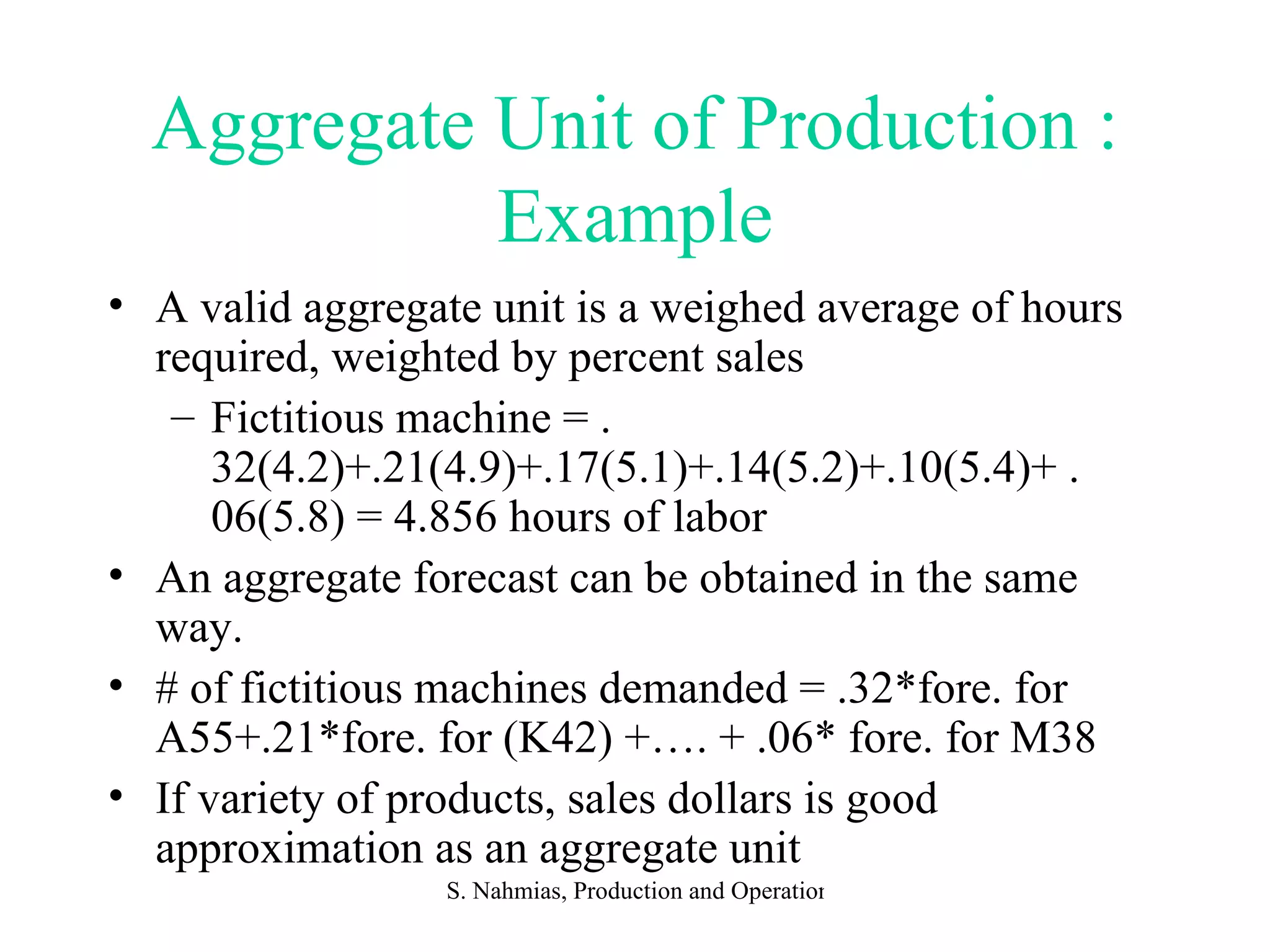

The Aggregate Production Function (APF) is a fundamental concept in economics that describes the relationship between the total output of an economy and the inputs used to produce that output. It is a crucial tool for understanding economic growth, productivity, and the factors that drive economic performance. By examining the APF, economists can gain insights into how changes in inputs such as labor, capital, and technology affect the overall output of an economy.
The Basics of the Aggregate Production Function
The Aggregate Production Function is typically represented by the equation:
Y = F(K, L, T)
Where:
- Y represents the total output of the economy.
- K represents the capital stock.
- L represents the labor input.
- T represents technology or total factor productivity.
This function illustrates how the combination of these inputs determines the overall output of the economy. The APF can take various forms, but one of the most commonly used is the Cobb-Douglas production function, which is expressed as:
Y = A * K^α * L^(1-α)
Where:
- A represents total factor productivity, which includes technological advancements and other efficiency factors.
- α is the output elasticity of capital, indicating the percentage change in output for a 1% change in capital, holding other factors constant.
- 1-α is the output elasticity of labor, indicating the percentage change in output for a 1% change in labor, holding other factors constant.
The Cobb-Douglas function assumes constant returns to scale, meaning that if both capital and labor are increased by a certain percentage, output will increase by the same percentage. This function is widely used due to its simplicity and the fact that it often fits empirical data well.
Key Components of the Aggregate Production Function
The Aggregate Production Function is composed of several key components, each playing a critical role in determining the overall output of an economy. These components include:
Capital
Capital refers to the physical assets used in the production process, such as machinery, equipment, and infrastructure. It is a crucial input in the production function because it enhances the productivity of labor. For example, a factory with modern machinery can produce more goods than one with outdated equipment. Capital accumulation is essential for economic growth, as it allows for increased production and efficiency.
Labor
Labor represents the human effort involved in the production process. It includes both the quantity and quality of workers. The quality of labor can be enhanced through education, training, and skill development. A well-educated and skilled workforce can significantly increase productivity and output. Labor is a flexible input, as it can be adjusted more easily than capital in response to changes in demand.
Technology
Technology, or total factor productivity, encompasses the advancements and innovations that improve the efficiency of production processes. It includes new methods, techniques, and tools that allow for greater output with the same inputs. Technological progress is a key driver of economic growth, as it enables economies to produce more with less. Investments in research and development, as well as the adoption of new technologies, are crucial for enhancing productivity and competitiveness.
Factors Affecting the Aggregate Production Function
Several factors can influence the Aggregate Production Function, affecting the relationship between inputs and output. These factors include:
Economic Policies
Government policies play a significant role in shaping the Aggregate Production Function. Policies related to taxation, regulation, and public investment can impact the availability and efficiency of capital and labor. For example, tax incentives for research and development can encourage innovation and technological progress. Similarly, policies that promote education and skill development can enhance the quality of the labor force.
Institutional Framework
The institutional framework of an economy, including legal and regulatory systems, property rights, and governance structures, can affect the Aggregate Production Function. A strong institutional framework provides a stable and predictable environment for businesses, encouraging investment and innovation. Conversely, weak institutions can lead to inefficiencies and hinder economic growth.
Globalization
Globalization has a profound impact on the Aggregate Production Function by facilitating the flow of goods, services, capital, and technology across borders. It allows economies to specialize in areas where they have a comparative advantage, leading to increased productivity and output. However, globalization also presents challenges, such as increased competition and the need for adaptation to new technologies and market conditions.
Empirical Evidence and Applications
The Aggregate Production Function has been extensively studied using empirical data to understand its determinants and implications. Researchers have used various econometric techniques to estimate the parameters of the production function and analyze the factors driving economic growth. Some key findings from empirical studies include:
Returns to Scale
Empirical studies have found that the Aggregate Production Function often exhibits increasing returns to scale, meaning that a proportional increase in inputs leads to a more than proportional increase in output. This suggests that economies of scale play a significant role in economic growth.
Technological Progress
Technological progress has been identified as a crucial driver of economic growth. Empirical evidence shows that countries with higher levels of research and development spending and technological adoption tend to have higher productivity and output growth.
Human Capital
Investments in human capital, such as education and training, have been found to have a positive impact on the Aggregate Production Function. Countries with higher levels of education and skill development tend to have higher productivity and economic growth.
Challenges and Limitations
While the Aggregate Production Function is a powerful tool for understanding economic growth, it also has several challenges and limitations. Some of these include:
Measurement Issues
Measuring the inputs and outputs of the Aggregate Production Function can be challenging. For example, accurately measuring capital stock and total factor productivity can be difficult due to the lack of reliable data and the complexity of these concepts.
Assumptions and Simplifications
The Aggregate Production Function often relies on simplifying assumptions, such as constant returns to scale and perfect competition. These assumptions may not hold in reality, limiting the applicability of the model.
Dynamic Factors
The Aggregate Production Function typically focuses on static relationships between inputs and output. However, economic growth is a dynamic process influenced by various factors, including changes in technology, institutions, and policies. Capturing these dynamic factors can be challenging.
📝 Note: The Aggregate Production Function provides a valuable framework for understanding economic growth, but it should be used in conjunction with other analytical tools and empirical evidence to gain a comprehensive understanding of economic performance.
In conclusion, the Aggregate Production Function is a cornerstone of economic analysis, offering insights into the relationship between inputs and output in an economy. By examining the key components of capital, labor, and technology, as well as the factors that influence the production function, economists can better understand the drivers of economic growth and productivity. Empirical evidence supports the importance of technological progress, human capital, and institutional frameworks in enhancing economic performance. However, it is essential to recognize the challenges and limitations of the Aggregate Production Function and use it in conjunction with other analytical tools to gain a comprehensive understanding of economic dynamics.
Related Terms:
- aggregate production function khan academy
- aggregate production function diagram
- the aggregate production function exhibits
- aggregate production examples
- calculate aggregate production formula
- how to calculate aggregate output