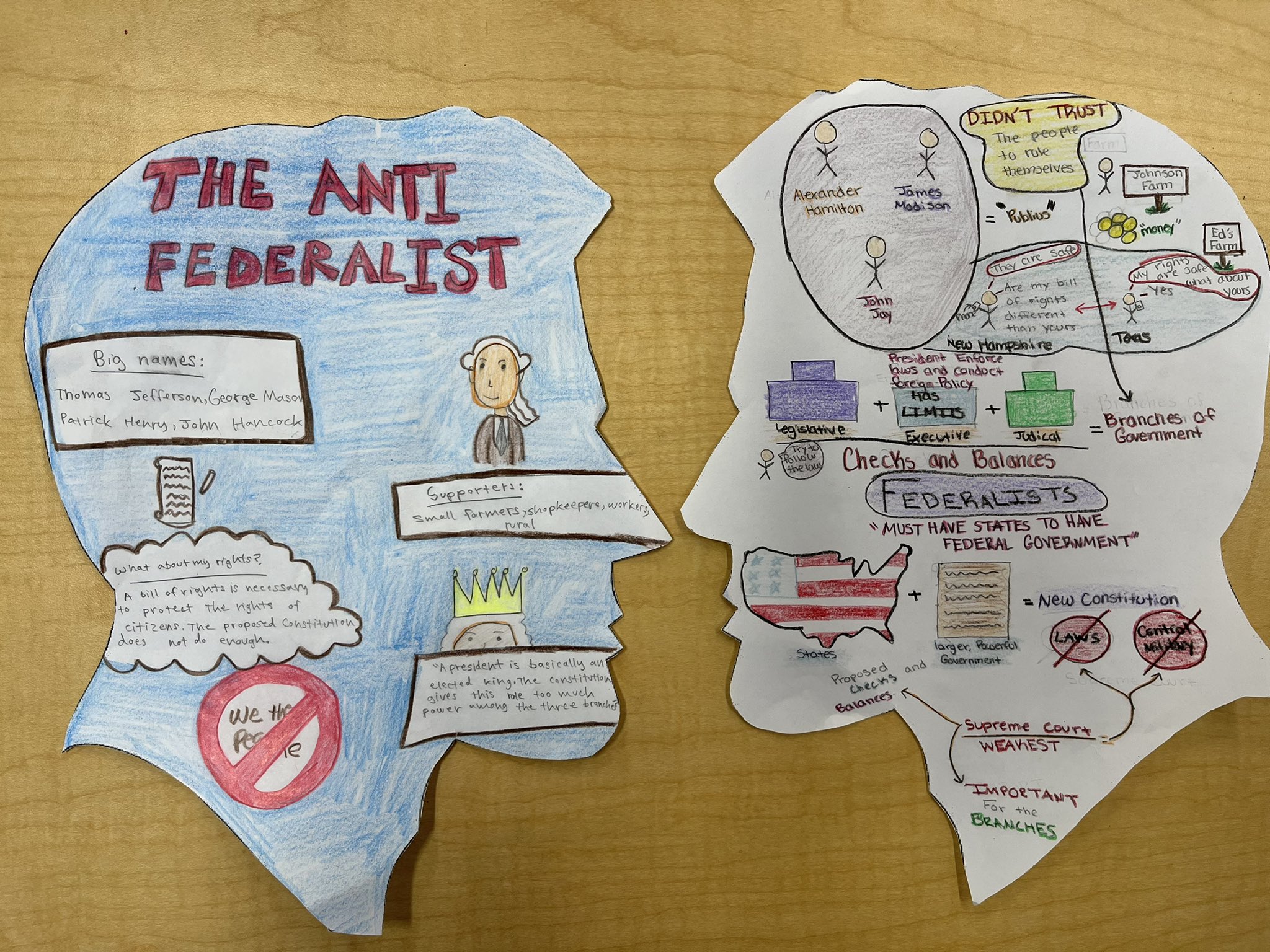

The debate between the Federalists and Anti-Federalists during the formation of the United States Constitution was a pivotal moment in American history. This period saw intense discussions and disagreements over the structure and powers of the new government. Understanding the perspectives of both the Federalists and Anti-Federalists provides valuable insights into the foundations of the American political system.
The Federalists and Their Vision
The Federalists were a group of influential leaders who advocated for a strong central government. Key figures among the Federalists included Alexander Hamilton, James Madison, and John Jay. Their primary goal was to create a robust federal system that could effectively manage the nation's affairs and ensure stability.
The Federalists believed that a centralized government was essential for several reasons:
- National Unity: A strong central government would help maintain unity among the states, preventing them from acting independently and potentially causing conflicts.
- Economic Stability: Federalists argued that a unified economic policy would promote trade and commerce, benefiting the entire nation.
- Defense and Security: A centralized government could better manage national defense and security, protecting the country from external threats.
One of the most significant contributions of the Federalists was the series of essays known as The Federalist Papers. Written by Hamilton, Madison, and Jay, these essays provided a detailed explanation of the Constitution and its provisions. The essays addressed various concerns and objections raised by the Anti-Federalists, offering a comprehensive defense of the new government structure.
The Anti-Federalists and Their Concerns
The Anti-Federalists, on the other hand, were skeptical of a powerful central government. They feared that such a government could easily become tyrannical and infringe upon the rights of the people. Notable Anti-Federalists included Patrick Henry, Samuel Adams, and George Mason.
The Anti-Federalists had several key concerns:
- State Sovereignty: They believed that the states should retain significant autonomy and that a strong central government could undermine state sovereignty.
- Individual Liberties: Anti-Federalists were concerned that a powerful federal government could infringe upon individual liberties and civil rights.
- Representation: They argued that the proposed Constitution did not provide adequate representation for the people, particularly those in rural areas.
To address these concerns, the Anti-Federalists proposed amendments to the Constitution. These amendments, known as the Bill of Rights, were designed to protect individual liberties and limit the powers of the federal government. The Bill of Rights was eventually ratified and became an integral part of the Constitution, addressing many of the Anti-Federalists' concerns.
The Debate and Its Impact
The debate between the Federalists and Anti-Federalists was not merely an academic exercise; it had real-world implications for the future of the United States. The arguments presented by both sides shaped the Constitution and the political landscape of the nation.
The Federalists' vision of a strong central government laid the groundwork for a unified nation capable of addressing national challenges. Their emphasis on economic stability and national defense helped establish a framework for economic growth and security.
Meanwhile, the Anti-Federalists' concerns about individual liberties and state sovereignty led to the inclusion of the Bill of Rights. This ensured that the rights of the people were protected and that the federal government's powers were limited, creating a balance between federal authority and state autonomy.
The debate between the Federalists and Anti-Federalists also highlighted the importance of compromise and negotiation in the political process. Both sides had to make concessions to reach a consensus, demonstrating the value of dialogue and cooperation in governance.
One of the most significant outcomes of this debate was the establishment of a system of checks and balances. This system ensures that no single branch of government becomes too powerful, preventing the potential for tyranny and safeguarding the rights of the people.
The Role of The Federalist Papers
The Federalist Papers played a crucial role in the debate between the Federalists and Anti-Federalists. These essays, written under the pseudonym "Publius," provided a detailed explanation of the Constitution and its provisions. They addressed various concerns and objections raised by the Anti-Federalists, offering a comprehensive defense of the new government structure.
The essays covered a wide range of topics, including:
- The structure and powers of the federal government
- The importance of a strong central government
- The need for a system of checks and balances
- The protection of individual liberties
The Federalist Papers were instrumental in gaining support for the Constitution. They provided a clear and persuasive argument for the need for a strong central government, addressing many of the concerns raised by the Anti-Federalists.
One of the most famous essays in The Federalist Papers is Federalist No. 10, written by James Madison. In this essay, Madison argues that a representative democracy is the best form of government for protecting individual liberties and preventing the tyranny of the majority. He proposes that a large and diverse republic can better manage factionalism and ensure the protection of minority rights.
Another notable essay is Federalist No. 51, also written by Madison. In this essay, Madison discusses the importance of a system of checks and balances. He argues that by dividing the powers of government among different branches, each branch can act as a check on the others, preventing any single branch from becoming too powerful.
These essays, along with the others in The Federalist Papers, provided a comprehensive defense of the Constitution and helped to sway public opinion in favor of its ratification.
The Bill of Rights and Its Significance
The Bill of Rights, proposed by the Anti-Federalists, was a direct response to their concerns about individual liberties and the powers of the federal government. The Bill of Rights consists of the first ten amendments to the Constitution and includes protections for various civil liberties.
The Bill of Rights addresses several key areas:
- Freedom of Speech and Religion: The First Amendment protects the freedom of speech, press, assembly, and religion, ensuring that individuals can express their beliefs without fear of government reprisal.
- Right to Bear Arms: The Second Amendment guarantees the right of the people to keep and bear arms, ensuring that citizens have the means to defend themselves and their property.
- Protection from Unreasonable Searches and Seizures: The Fourth Amendment protects individuals from unreasonable searches and seizures by the government, requiring that warrants be issued based on probable cause.
- Right to a Fair Trial: The Fifth, Sixth, and Seventh Amendments provide protections for individuals accused of crimes, including the right to a fair trial, the right to an attorney, and the right to a jury trial.
- Protection from Cruel and Unusual Punishment: The Eighth Amendment prohibits the use of cruel and unusual punishments, ensuring that individuals are treated humanely.
The Bill of Rights was a significant compromise between the Federalists and Anti-Federalists. It addressed many of the concerns raised by the Anti-Federalists while preserving the structure and powers of the federal government proposed by the Federalists.
The Bill of Rights has had a profound impact on American society and politics. It has ensured that individual liberties are protected and that the powers of the federal government are limited, creating a balance between federal authority and state autonomy.
The Bill of Rights has also served as a model for other countries, influencing the development of constitutional protections for individual liberties around the world.
The Legacy of the Federalists and Anti-Federalists
The debate between the Federalists and Anti-Federalists has left a lasting legacy on American politics and society. The arguments presented by both sides continue to shape the political landscape and influence contemporary debates about the role of government and the protection of individual liberties.
The Federalists' vision of a strong central government has been instrumental in the development of a unified nation capable of addressing national challenges. Their emphasis on economic stability and national defense has helped establish a framework for economic growth and security.
Meanwhile, the Anti-Federalists' concerns about individual liberties and state sovereignty have ensured that the rights of the people are protected and that the powers of the federal government are limited. The Bill of Rights, proposed by the Anti-Federalists, has become an integral part of the Constitution, safeguarding individual liberties and creating a balance between federal authority and state autonomy.
The debate between the Federalists and Anti-Federalists also highlights the importance of compromise and negotiation in the political process. Both sides had to make concessions to reach a consensus, demonstrating the value of dialogue and cooperation in governance.
The legacy of the Federalists and Anti-Federalists can be seen in various aspects of American politics and society, including:
- The structure and powers of the federal government
- The protection of individual liberties
- The importance of a system of checks and balances
- The role of compromise and negotiation in governance
The debate between the Federalists and Anti-Federalists continues to influence contemporary debates about the role of government and the protection of individual liberties. It serves as a reminder of the importance of dialogue, compromise, and the protection of individual rights in a democratic society.
The Federalists and Anti-Federalists played a crucial role in shaping the Constitution and the political landscape of the United States. Their debate highlighted the importance of a strong central government and the protection of individual liberties, creating a balance between federal authority and state autonomy. The legacy of their debate continues to influence American politics and society, serving as a reminder of the importance of dialogue, compromise, and the protection of individual rights in a democratic society.
📝 Note: The debate between the Federalists and Anti-Federalists was a complex and multifaceted process that involved numerous individuals and groups. This post provides a general overview of the key arguments and outcomes of the debate, but it is important to recognize the diversity of perspectives and the nuances of the discussions that took place during this period.
The debate between the Federalists and Anti-Federalists was a pivotal moment in American history. It shaped the Constitution and the political landscape of the nation, establishing a framework for governance that continues to influence contemporary debates about the role of government and the protection of individual liberties. The legacy of this debate serves as a reminder of the importance of dialogue, compromise, and the protection of individual rights in a democratic society.
Related Terms:
- federalists vs anti federalist beliefs
- federalists and anti federalists quizlet
- unlike the anti federalists believed
- federalists and anti federalists similarities
- federalists vs anti beliefs
- famous federalists and anti federalists